Help Our Wild Bees Thrive in Eindhoven! 🌻
Discover why wild bees are crucial for our city and how you can create a bee-friendly environment in your own space.
Discover the diverse world of wild bees and their unique characteristics
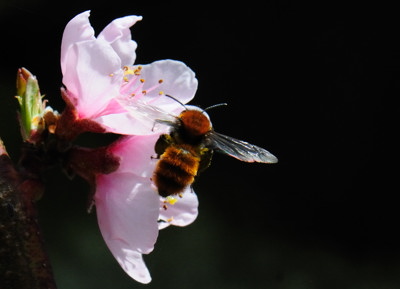
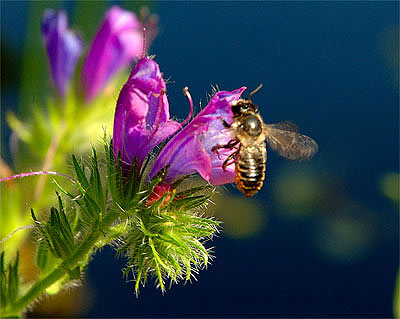
Unlike the honeybees we often see in hives, wild bees are a diverse group of over 350 species in the Netherlands alone. These include bumblebees, mason bees, mining bees, and many more. Most wild bees are solitary, meaning they don't live in large colonies like honeybees. They are quiet heroes of our ecosystem!
© foto: Huib Koel
© foto: Huib Koel
They may look similar, but they're very different! Tap the cards to learn more.
Apis mellifera
350+ species in NL
Wild bees are actually BETTER pollinators than honeybees! A single mason bee can pollinate as many flowers as 100 honeybees. That's because wild bees are messy — they get pollen all over themselves!
Our wild bees are disappearing. Here's what's happening and why it matters to YOU.
60%
of wild bee species in the Netherlands are in decline
30+
species already extinct in the Netherlands
75%
of natural habitat lost to urbanization in Eindhoven area
1/3
of our food depends on pollination
Eindhoven is growing fast! New buildings, roads, and parking lots replace the meadows and sandy patches where wild bees used to nest and find food. When their homes disappear, the bees disappear too.
Chemical sprays used in gardens and farms can poison bees. Even small amounts make bees confused and sick. They can't find their way home or remember where the flowers are.
Warmer winters and unpredictable weather confuse bees. Flowers bloom at the wrong time, and bees wake up when there's no food. The timing between bees and flowers gets out of sync.
Eindhoven has transformed from a rural area with sandy heathlands to one of the fastest-growing tech cities in the Netherlands. The Brainport region's expansion means more buildings and less nature. Wild bees that once thrived on the sandy Brabant soil are losing their nesting sites.
But there's hope! Projects like bee hotels, wildflower meadows in parks, and green rooftops are helping. The city of Eindhoven is working to create "green corridors" so bees can travel safely between patches of nature. Every garden and balcony can become a stepping stone for wild bees!
👉 YOU can be part of the solution! Even a small flower pot on your windowsill helps wild bees survive in our city.
Without wild bees, our world would look VERY different. Here's why they're superheroes!
Apples, strawberries, tomatoes, blueberries — wild bees pollinate many of the fruits and vegetables we eat every day. Without them, supermarket shelves would be half empty!
Wild bees pollinate wildflowers that feed other animals. Birds eat the seeds, insects live on the plants. If bees disappear, the whole food chain falls apart like dominoes.
Many plants used in medicines need bees to reproduce. Without pollination, we could lose important natural medicines that help keep people healthy.
Bee pollination is worth billions of euros worldwide. Dutch farmers especially rely on wild bees to pollinate crops like apples, pears, and berries.
Wild bees keep our gardens, parks, and green spaces beautiful and blooming. They make Eindhoven a prettier, greener, and healthier place to live!
By helping plants grow, bees help produce the oxygen we breathe and absorb CO2. Healthy plants mean cleaner air for everyone in Eindhoven!
No more strawberries in summer. No more apple pie. No wildflowers in the park. No birds singing (because their food is gone too). That's why every single wild bee matters — and why Eindhoven needs YOUR help!
Test your knowledge about wild bees! Can you get all 8 questions right?
Simple actions you can take to create bee-friendly spaces in Eindhoven
Lavender, sunflowers, and wildflowers are perfect for local wild bee species
Group flowers together rather than planting single specimens
Include different colors and flower shapes to attract various bee species
Chemicals can harm bees and other beneficial insects
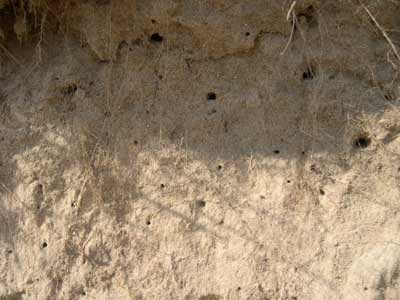
Some bee species need bare soil for nesting
© foto: Huib Koel
Even small balcony gardens or window boxes can create valuable habitat.
Create a cozy home for solitary wood-nesting bees with simple materials!
Use untreated hardwood blocks (oak, beech, or ash). Avoid softwoods like pine — they absorb moisture and can cause mould that harms bee larvae.
Drill holes 3–10 mm wide and 8–10 cm deep. Different diameters attract different bee species! Drill into the end grain (not the bark side) and smooth any splinters.
Bundle bamboo sticks or reed stems with natural hollows. Cut them just behind a node so one end is closed. Pack them tightly in a frame or tin can.
Hang your nest at least 1 metre high, facing south or south-east for morning sun. Shelter it from rain with a small roof. Near wildflowers is perfect!
💡 Pro Tip
Replace stems every 2–3 years to prevent parasites. You can move old stems to a mesh cage nearby so any remaining larvae can still emerge safely!
Swipe to see nests built by fellow bee-lovers!
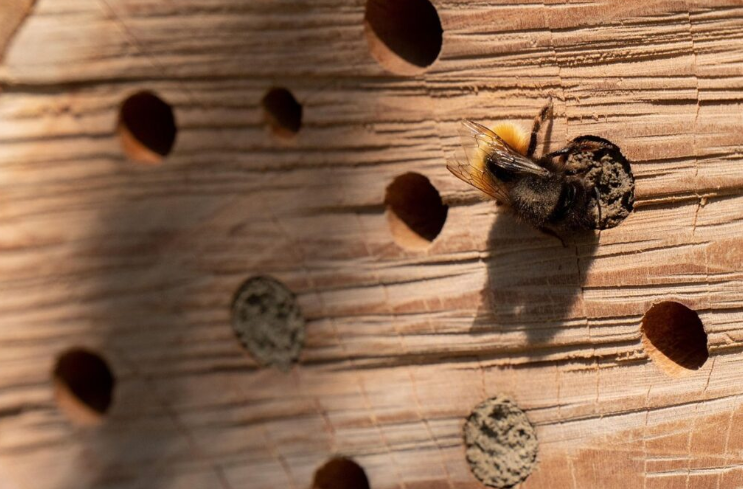
Drilled hardwood block nest
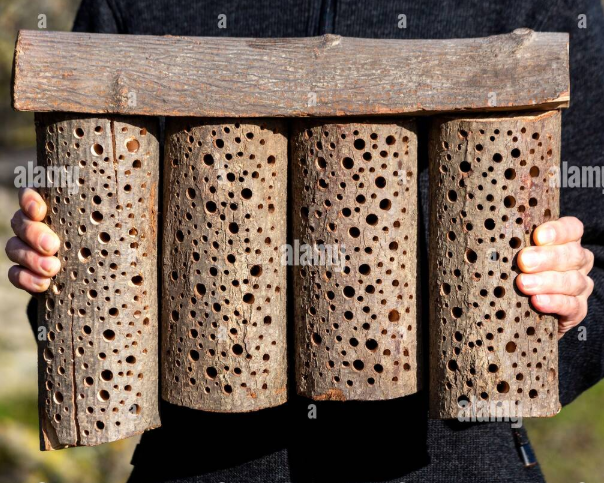
Creative DIY bee hotel
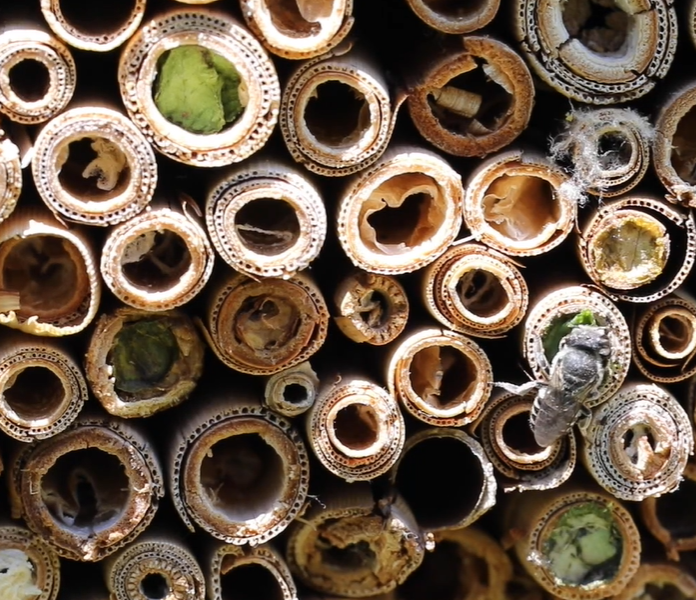
Bamboo & reed stem nest
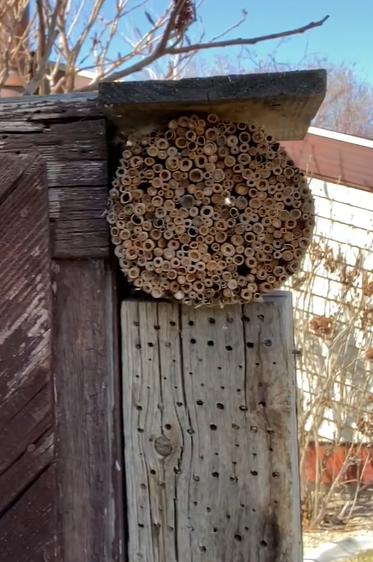
Nature-inspired bee shelter
Photos shared by community members